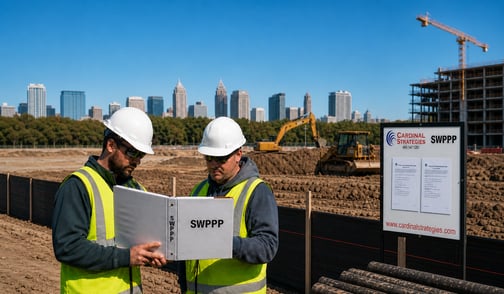
The Real Cost of Getting Texas SWPPP Compliance Wrong
Texas SWPPP compliance is about more than avoiding a fine. It helps protect your project schedule, control costs, and maintain trust with owners and regulators. When stormwater requirements are addressed only after a problem occurs, minor issues can quickly lead to construction delays, costly repairs, and difficult compliance reviews.
Many Texas general contractors, builders, and land developers face the same SWPPP compliance challenges:
- Permit requirement confusion for one-acre sites or phased developments
- Plans that do not match the actual grading, drainage, or site conditions
- Inspection reports that identify problems without explaining how to fix
- Missing or disorganized records when a Regulator requests documents
- Stormwater controls that keep failing because the cause was never corrected
Texas regulators often focus on two things during a stormwater inspection:
-
If the SWPPP matches actual current site conditions
-
If the required records are complete and up to date
Inspectors may compare the plan to the controls installed in the field. When the two do not match, the site may be considered out of compliance, even if the controls appear to be working.
A basic approach is no longer enough. A template SWPPP, a rushed inspection, or scattered field notes may leave important gaps in your compliance process. Texas construction teams need a practical system that connects permit requirements, site planning, inspections, corrective actions, and final closeout in a way the entire team can understand and follow.
This is where an experienced Texas SWPPP consultant can make a real difference. Instead of asking your team to interpret permit requirements on its own, the right partner can:
- Confirm whether permit coverage is needed before construction begins
- Prepare a SWPPP that reflects the actual site and construction schedule
- Complete inspections on the schedule required for the project
- Clearly document problems and track them until they are corrected
- Update the plan as site conditions change so records remain accurate and complete
When each part of the process works together, SWPPP compliance becomes easier to manage and less likely to slow down construction. If your superintendent is unsure what to do after an inspection, or your team has had to search for missing records before a review, it may be time for a better system.
Schedule a call with Mike Wofford to discuss practical SWPPP support for your next Texas construction project.
What a Practical, Site-specific SWPPP Should Look Like
An effective Stormwater Pollution Prevention Plan should be more than a document kept in a file. It should help guide the field team, reflect current site conditions, and support clear communication during inspections or reviews. A practical SWPPP program covers the entire project, from permit evaluation through final stabilization and record retention.
During the planning stage, builders and general contractors should be able to answer questions such as:
- Does this project need coverage under the current Texas Construction General Permit?
- Are we a primary operator, a secondary operator, or both?
- Are there local stormwater requirements in addition to the state permit?
An experienced consultant will review the project scope, drainage, construction phases, and site conditions before preparing the plan. Instead of using a generic package, the consultant should create a site-specific SWPPP that addresses disturbed areas, site entrances, stockpiles, material storage, stormwater controls, and discharge points. The plan should also use clear language that superintendents and field crews can understand and follow.
During construction, the inspection and reporting process should be clear and practical. A strong SWPPP inspection program should include:
- Routine, rain-related inspections on schedule as required for the project
- Clear notes about the areas inspected and the conditions found
- Photos that show the exact location of each problem
- Specific corrective actions that can be assigned, tracked, and verified
A note that only says “repair silt fence” does not give the field team enough direction. The report should explain which section is damaged, what is wrong, and how quickly it needs to be corrected. A well-organized inspection report should serve as a practical guide for the superintendent, not just another document for the project file.
The SWPPP should also be updated as the site changes. Construction conditions can shift quickly as new areas are disturbed, drainage patterns change, and temporary controls are added, moved, or removed. The program should include a clear process for updating the written plan, site maps, and other documents so they continue to match actual field conditions.
Closeout should receive the same level of attention. Final stabilization, temporary control removal, record organization, and permit termination all need to be completed correctly. Ending inspection support too early can leave the operator responsible for unfinished permit requirements without the help needed to close the project properly.
If your current SWPPP program is missing any of these elements, it may be creating unnecessary work and stress for your project team. To learn how a coordinated SWPPP approach could make compliance easier on your next Texas project, schedule a call with Mike Wofford today.
How Cardinal Strategies Supports Texas Builders from Day One to Closeout
Cardinal Strategies helps Texas builders, general contractors, and land developers manage SWPPP compliance without adding more confusion to the jobsite. The goal is to make stormwater requirements a clear and organized part of the project, not a problem that only gets attention after heavy rain or an inspection.
At the start of the project, Cardinal reviews the site to determine whether permit coverage is required and how state and local requirements apply. The team prepares a site-specific SWPPP based on the actual grading, drainage, site access, and construction schedule. Each plan is written so superintendents and field teams can understand their responsibilities and follow the required procedures.
During construction, Cardinal Strategies provides practical inspection and reporting support. Inspectors:
- Document actual site conditions with clear notes and photos
- Explain each problem so the field team knows what needs to be corrected
- Communicate urgent concerns quickly
- Track corrective actions until the work is completed
- Confirm when reported issues have been resolved
When the same problem continues to occur, Cardinal can help identify the reason behind it. This allows the project team to address drainage, sequencing, or site conditions instead of repeatedly repairing the same stormwater control.
Cardinal also helps keep the SWPPP current as construction progresses. Site maps, control plans, written procedures, and amendment records can be updated when conditions change. Support continues through final stabilization, permit termination, and record organization, helping the project remain prepared for future reviews.
The goal is simple. Owners, developers, and general contractors should feel confident that stormwater requirements are being managed throughout the project. Your team can stay focused on construction while a coordinated SWPPP program helps protect the schedule and reduce compliance risk.
Get Practical SWPPP Support for Your Next Texas Project
A strong SWPPP program should make compliance easier for your team, not create more work. Cardinal Strategies Environmental Team provides site-specific plans, inspections, reporting, corrective action support, and project closeout services for Texas construction teams.
If you are planning a new project or rethinking how SWPPP is handled on an existing one, you can talk through options directly with Cardinal's Environmental Services Manager, Mike Wofford. Schedule a call today for a time that works for you.
.png?width=300&height=300&name=Untitled%20design%20(30).png)