Stormwater Compliance Basics for Construction Projects in Texas
Stormwater construction compliance means putting specific controls, plans, and inspection routines in place so muddy runoff from your site does not leave the property and violate permit conditions. In Texas, most projects that disturb one acre or more must follow the TCEQ Construction General Permit TXR150000 and any added local requirements.
For North Texas and southern Oklahoma builders, that usually starts with determining whether your site disturbs one acre or is part of a larger common development. If so, you will likely need coverage under the Texas Pollutant Discharge Elimination System (TPDES) or a similar state permit. The Texas Commission on Environmental Quality (TCEQ) requires a Stormwater Pollution Prevention Plan (SWPPP), appropriate erosion and sediment controls, and routine inspections for qualifying sites.
Projects of five acres or more generally require a Notice of Intent filed through the STEERS system, posted site notices, and more frequent inspections. Local jurisdictions, such as the City of Fort Worth, often layer on grading permits, SWPPP review, and their own inspection triggers. TCEQ’s construction stormwater page explains when the state permit applies. The bottom line: treating stormwater as a core part of preconstruction planning is far less costly than scrambling after an inspection notice or stop-work order.
Designing an Effective SWPPP Your Crew Will Actually Follow
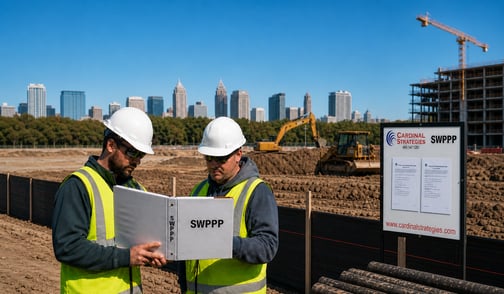
An effective Stormwater Pollution Prevention Plan (SWPPP) is both a compliance document and a practical field playbook. It should clearly identify who is responsible, where runoff will travel, which controls will be installed, and how inspections and maintenance will be documented from groundbreaking through final stabilization.
Start with a drainage-focused site map that shows inlets, low points, stockpile areas, and discharge points. Then, specify controls that match these conditions: stabilized entrances, silt fence, rock check dams, sediment basins, and inlet protections. For a one- to five‑acre site, TCEQ expects these details to be in place before soil is disturbed, with a posted Small Construction Site Notice.
Clarity is what makes a SWPPP workable in the field. Use simple legends, photos of typical installations, and construction-phase sequencing so superintendents can see when controls should be in place relative to grading and utility work. The SWPPP should also spell out inspection frequency, thresholds for maintenance, and how to handle heavy rain events over 0.5 inches, which often trigger additional checks under the permit.
Finally, treat the SWPPP as a living document. Update it when phasing changes, access routes shift, or new discharge points appear. Regularly reviewing it in subcontractor meetings reinforces that stormwater is a shared responsibility, not just a binder in the trailer.
Erosion and Sediment Controls That Hold up in Real Storms
Not all erosion and sediment control measures are created equal, especially under the intense storm events common in North Texas. The most reliable approach combines temporary surface protection with structural measures that slow, filter, and capture runoff before it leaves the site.
Erosion controls focus on protecting exposed soil. Examples include temporary seeding with fast-germinating grasses, rolled erosion control blankets on steeper slopes, and soil binders in high-traffic areas. These practices reduce the volume of sediment that can move during a storm and are especially critical near channels or property boundaries.
Sediment controls, such as silt fence, wattles, rock check dams, and sediment traps, are the second line of defense. They are designed to intercept and settle out soil that does move. For larger projects, sediment basins sized using hydrologic and hydraulic calculations can significantly reduce downstream impacts and help meet permit expectations.
Field performance matters more than product labels. Controls must be installed per manufacturer guidance, keyed into the soil, and maintained after heavy rains. A silt fence that is trenched and turned upslope at the ends will perform much better than one simply staked on the surface. Choosing controls with enough capacity and durability for repeated storm events avoids emergency repairs and potential enforcement actions.
Inspection Routines That Prevent Violations and Change Orders
Regular stormwater inspections are where plans meet reality. Under many permits, qualifying construction sites must be inspected at least once every seven to fourteen days and after significant rain events. In practice, tighter schedules often reduce rework, prevent complaints, and protect the project budget.
An effective inspection routine starts with a consistent checklist tied to your SWPPP: perimeter controls, inlets, stabilized entrances, stockpile protection, concrete washout areas, and material storage zones should all be evaluated. Document each inspection with dated photos and clear notes on deficiencies, repairs made, and follow‑up needs.
For example, in the Dallas–Fort Worth area, some jurisdictions expect weekly inspections plus additional checks after storms over 0.5 inches of rain, as outlined in resources such as regional compliance guides. Keeping a predictable rhythm of inspections helps operators stay ahead of clogged inlets, undercut silt fences, or tracking at exits.
It is also smart to connect inspections to project scheduling. Tie stormwater walkthroughs to regular site meetings so trade partners hear the same expectations and see the same issues. When recurring problems are flagged, adjust the SWPPP, add controls, or upgrade materials rather than repeating short‑term fixes that cost more over the life of the project.
Coordinating with TCEQ, MS4s, and Local Inspectors
Successful regulatory coordination is as much about communication as it is about technical controls. Most enforcement headaches arise when agencies feel they have been kept in the dark or see the same issues on multiple visits. Clear, proactive engagement can build trust and minimize surprises.
Start by confirming which permits, local ordinances, and Municipal Separate Storm Sewer System (MS4) rules apply. Many cities and counties in North Texas require separate grading or stormwater approvals on top of TCEQ coverage. For example, the City of Fort Worth links grading permits to construction stormwater requirements and expects operators to follow the TPDES Construction General Permit and local criteria outlined on its Construction Stormwater Compliance page.
Once requirements are clear, align your internal processes. Ensure Notices of Intent or Small Site Notices are submitted on time and posted on site, and that inspection logs are easy to share during a visit. When inspectors raise concerns, address them promptly, then follow up with documentation and photos.
A respectful, solutions‑oriented approach can turn inspections into collaborative problem‑solving instead of conflict. Over time, consistent performance builds a reputation that can make future reviews and approvals smoother for your team.
When to Bring in an Integrated Stormwater Partner like Cardinal Stormwater
There is a point where complex stormwater management moves beyond what a busy project team can tackle alone. Multi‑phase sites, sensitive downstream channels, or tight regulatory oversight can all benefit from an integrated partner who understands both engineering design and day‑to‑day environmental compliance.
An experienced stormwater firm can develop or refine your SWPPP, perform hydrologic and hydraulic modeling to size basins and channels correctly, and design control measures that work in real‑world conditions. They can also provide third‑party inspections, documentation support, and training for superintendents and crews so best practices become routine.
For developers, general contractors, and municipal owners, this kind of partnership often reduces total project risk. It can help avoid permit violations, schedule delays from rework, and emergency fixes after major storms. When the same team understands permitting, design, and inspection, they can anticipate issues earlier and recommend practical, constructible solutions.
If your projects are growing in size or regulatory visibility, consider engaging a stormwater partner early in planning. Aligning design, compliance, and field execution from the start is one of the most reliable ways to keep projects moving, protect adjacent properties and waterways, and demonstrate that your organization takes environmental responsibilities seriously.
.png?width=300&height=300&name=Untitled%20design%20(30).png)